Wednesday, November 27, 2024

Hong Kong Trip Report

Hong Kong - 8-17th November 2024

Dusky Warbler

A family holiday combined with a birding trip, with the aim to get experience with some of the Eastern Palearctic specialities that occur as vagrants in Britain. This was my second time birding in Hong Kong, although my previous trip in 2018 was merely a precursor to ten days spent at Danum Valley in Borneo on the undergraduate Biology Field Course, so I wasn't birding intensively during the stopover - it was also in mid-summer so I didn't see a great deal. I tried to schedule this trip to get a mixture of the tail-end of autumn migration and also some of the winter visitors, as well as fitting it around the start of a new job as a postdoc.

I had arranged to meet up with a friend I knew from Oxford, Ton Yeh, who lives in Hong Kong and had offered to take me round a few sites, as well as let me know the latest bird news from the local WhatsApp chats - his help was greatly appreciated in seeing some of the key species.

Since I visited some of the locations multiple times I thought that rather than structure this blog post in chronological order in terms of what I did on a day-by-day basis, I would split it up into the different locations - the result is a sort of photo essay, rather than an exhaustive list of what I saw. Most of the focus is on two main sites, Long Valley and Mai Po, and I have only briefly gone over what I saw at Kam Tin, Tai Po Kau and Lion's Nature Park.

As always, please click on the photos to view them at full resolution - the Blogger website shows a compressed version in line with the text.

Long Valley

Black-winged Stilts were everywhere in the ponds - and unlike in Britain at point blank range

Long Valley is an area of paddyfields and mixed agricultural land situated in the Northern Territories - it is the largest manmade freshwater wetland in Hong Kong. I had visited during my 2018 trip but saw very little other than Long-tailed Shrike. Since then, it has been closed for a couple of years to allow development into a nature reserve so I was very lucky that it reopened to birders literally on the weekend that I arrived in Hong Kong. It is situated only 15 minutes walk from my accommodation in Sheung Shui village so I visited almost every day - it became a sort of "patch" for the trip. 


Long Valley is famous in autumn and winter for wader, pipit and bunting passage and the birding is quite easy - compared to Britain, the birds are very close and for this reason I concentrated most of my photographic efforts at this site. Resident birds include large numbers of egrets, herons, ducks and waterfowl, as well as passerines such as bulbuls and munias.

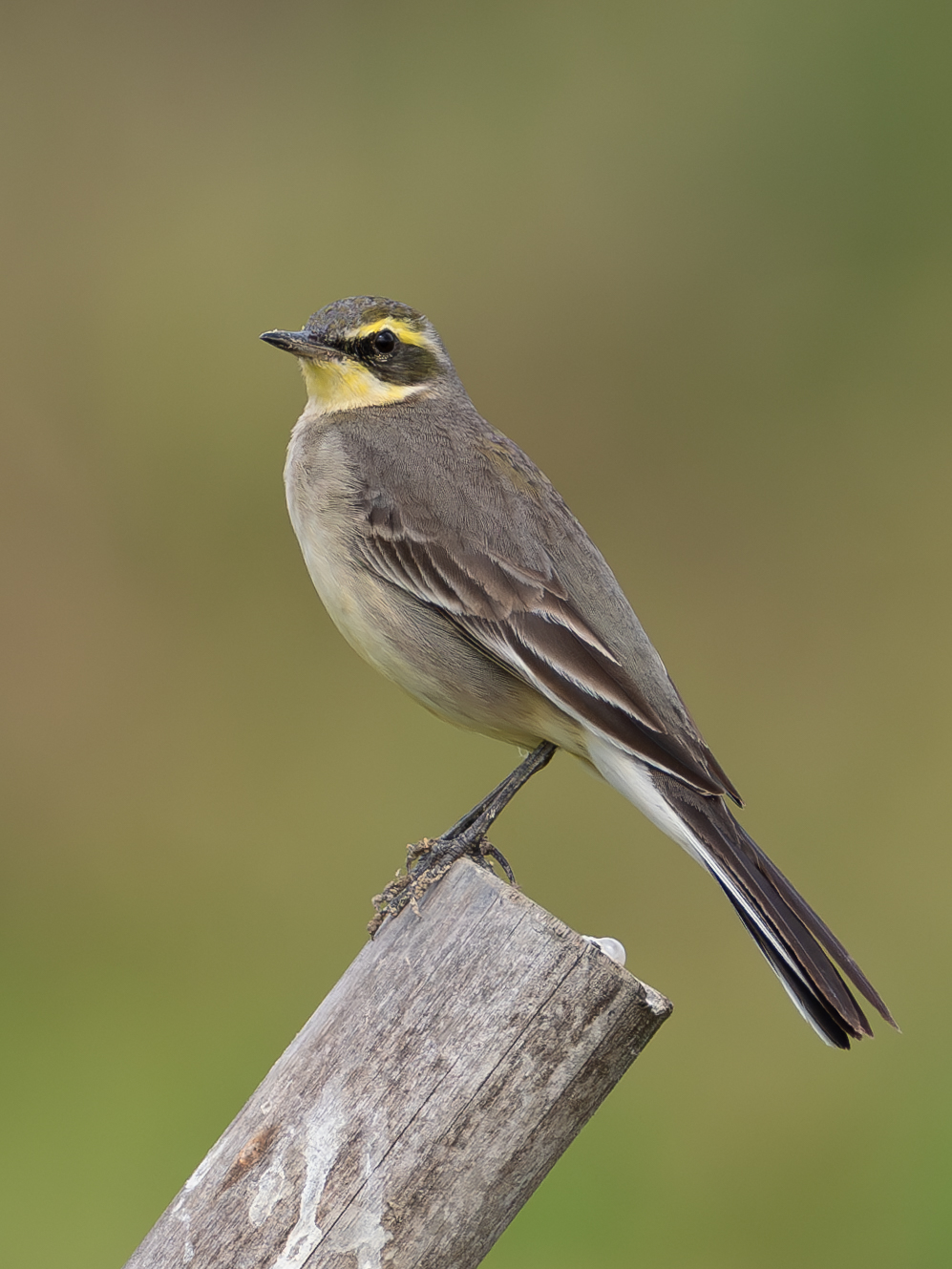
In Britain, I very much enjoy searching through pipits and wagtails and several gripping species in a Western Palearctic context showed very well here - including Red-throated Pipit, Olive-backed Pipit, Richard's Pipit, Eastern Yellow Wagtail and leucopsis White Wagtail.

Red-throated Pipits

Olive-backed Pipit

Eastern Yellow Wagtail (subspecies taivana)

A species that was high on my target list was Siberian Pipit, which would be a lifer for me. They are an uncommon passage migrant through Hong Kong in autumn, largely at wetland sites. Recently elevated to full species status from Buff-bellied Pipit, they look substantially different to the American Pipits that have occurred as vagrants in Britain.

A Siberian Pipit had been reported sporadically at Long Valley and I soon encountered a candidate bird wandering around with some White Wagtails. To be honest I didn't look at it too closely other than to verify that I wasn't one of the more commonly occurring pipit species, took a couple of photos and was largely satisfied that it was the Siberian Pipit after a quick look online for some comparison photos. I later included these photos when submitting my eBird checklist for that visit.


It was therefore rather shocking to receive a message from Ton a few hours later saying "People are asking if the Siberian Pipit picture is actually Water Pipit" on the local rarities WhatsApp group. I initially thought that I'd overlooked the status of Water Pipit in Hong Kong and that I'd suggested that a common species was something rarer. Upon checking that Water Pipit was actually something of a mega in Hong Kong (with only 6 previous records), I realised that my mistake was the other way round and slight panic set in - neither Ton nor of course I knew the local birders well enough to enquire as to whether they thought the identification was certain or the features that they were looking at to separate these species. 

After madly trying to search for ID articles and pictures of both species online I realised that I actually knew very little about any of this and that I had better ask some people for help - therefore I sent the images to Ian Lewington and Ben Sheldon and awaited their response. By this point however, I could see that the suggestion of the HK birders was almost certainly correct, mostly because my bird had such dark legs, compared to the pinkish legs shown by most Siberian Pipits (why did I not think to check this feature before uploading the photos!!!). I was unsure however if any of the other features on my bird (reduced flank streaking for instance) were within the range of variation for Siberian Pipit.

Embedded here is an image of a Siberian Pipit taken at Long Valley in November from the Macaulay Library for comparison purposes - I had hoped to take some similar photos of this species myself!

The Asian subspecies of Water Pipit (Anthus spinoletta blakistoni) looks significantly different to the Water Pipits that we get in Britain, not that I regularly get a good look at them here anyway. It's therefore been a bit of a learning experience in their identification and I've summarised the main points below - thanks to Ben, Ian and also Per Alstrรถm for their comments.

Identification features for blakistoni Water Pipit versus Siberian Pipit:

1. Reduced flank streaking.

2. Paler brown mantle and rump.

3. Different face pattern - slightly less prominent moustachial stripe.

4. Heavier/different pattern of mantle streaking.

5. Dark legs.

6. Structural differences - slightly rangier, different head shape.

It is worth noting that this seems to be a particularly heavily marked Water Pipit (thanks to Grahame Walbridge for backing me up on this!), with a very dark, solid malar patch inviting confusion with Siberian Pipit. Lesson here though is that you should scrutinise everything completely, even in an unfamiliar context, and don't just assume!

Another group that I was particularly keen to see were the eastern buntings which occur as vagrants in Britain, and over the course of my visits was pleased to see Little Bunting, Chestnut-eared Bunting, Rustic Bunting (pleased to find three myself as it's a scarcity here), Black-faced Bunting and Yellow-breasted Bunting (a real speciality of the site). I also managed to twitch Common Reed Bunting, a Hong Kong rarity.

Chestnut-eared Bunting with spider orb-web in the background - rarely do my hobby and research work unite so well in one picture!

Male Rustic Bunting in a dappled evening light

Yellow-breasted Bunting

Common Reed Bunting, a different subspecies to the one we get in the UK (presumably pyrrhulina) - definitely looked a bit paler

As well as the buntings, the low bushes and scrubby areas held large numbers of Dusky Warblers and Yellow-browed Warblers. Being Phylloscopus warblers they were a real pain to photograph, but a small pond full of lily pads allowed very close views, and I lucked out massively when a Dusky Warbler chose to briefly perch up only about 1.5m away from me (please click!).

Easily the best views I've ever had of this species

Despite this bird being partially obscured I quite like the composition of the photo

Sadly didn't manage to improve on this Yellow-browed Warbler image!

Greater Painted Snipe is another Long Valley speciality and after some frustratingly brief flight views I wanted to get some shots on the deck - after a lot of searching I managed to locate the scrape which seemed to be their main roosting area.


Superb cryptic posture

Some of the other waders present included Common Snipe, Avocet, Black-winged Stilt, Wood, Green and Common Sandpipers, Greenshank, Marsh Sandpiper, Little Ringed Plover and an extremely confiding Spotted Redshank.

Spotted Redshank - could literally get to within two metres of this bird

Marsh Sandpiper

I also had a few raptors drift overhead - Peregrine, Common Kestrel, Besra, Eastern Buzzard, Black-winged Kite and the omnipresent Black Kites.

Eastern Buzzard - very different jizz to Common Buzzard, reminded me more of Rough-legged Buzzard

Male Besra

I also managed to jam in on a twitch for Tundra Bean Goose - again less than ten records for Hong Kong. Extraordinary that this site had two megas and a whole host of rare/scarce species in under a week - does anywhere in the UK even come close?

A very confiding bird - there also seemed to be some initial confusion over its identity re. Tundra versus Taiga Bean Goose

Goose twitch

Other inhabitants of the paddyfields included Zitting Cisticola, Scaly-breasted and White-rumped Munias, Light-vented and Red-whiskered Bulbuls, Plain and Yellow-bellied Prinias, Oriental Magpie-Robin, Black-browed Reed Warbler, Oriental Reed Warbler, Stejneger's Stonechat and Long-tailed Shrike.

Zitting Cisticola

Oriental Reed Warbler - very pleased to see this rather magnificent Acro as I thought it might be a bit too late in the season

Plain Prinia - a very common species but always good value and relatively easy to photograph


Yellow-bellied Prinia - I found these to be a bit more skulking

Long-tailed Shrike - they clearly do a lot of ringing around here as the next photo also demonstrates

Stejneger's Stonechat

Overall this is just an absolutely fantastic site and I would no doubt be extremely satisfied patch working it, although avoiding all the toggers might get a bit challenging!

Brambling twitch at Long Valley

Mai Po

Olive-backed Pipit on a lovely bed of leaves along the entrance path

Mai Po is a WWF-managed reserve on the Southern side of the Deep Bay that is internationally famous for its waders (especially as a site for Spoon-billed Sandpiper in spring). I was very keen to do some birding at this reserve despite a rather complicated application process for international visitors - I had to send in my BTO ringing permit as proof that I was interested enough in birds to warrant entry... The tickets were very expensive and the fact that I had to arrange my visit well in advance also meant that I would only be able to go there on one pre-booked day.

It was therefore sod's law that tropical cyclone Toraji ended up hitting exactly on the night before/morning of my visit - I had been anxiously watching the weather forecast during the week and a Typhoon 8 warning was put in place, which meant that all public transport was shut down and people were told to stay at home. Luckily, the warning was lifted at about 10:20am as the weather died down so I hurriedly got a taxi to the reserve - unfortunately I knew that this delay meant that I would have missed the optimal tide window for viewing the mudflats.

After hurriedly collecting my permit from the WWF centre I began birding from the three-floor hide overlooking the pools near the entrance, which were covered in ducks and egrets. Eurasian Teal, Wigeon, Shoveler, Pintail and Garganey were all present, although I was disappointed not to connect with Spot-billed Duck or the reported Baikal Teal. Both Black-faced and Eurasian Spoonbill were associated with the herons and egrets on the scrape, and I also got good views of Eurasian Bittern perched in the reeds.

Probably the nicest hide I have ever been in

Purple Heron in flight over the reedbed

The height of the hide meant that I could see most of the reserve from the top floor, and I was pleased to pick out two Eastern Marsh Harriers associating over the reedbed. They offered some fantastic photo opportunities against the distant skyscrapers of Shenzhen across the bay. Ospreys and Black Kites were also present.

Adult female Eastern Marsh Harrier

Interaction between the adult female and a juvenile Eastern Marsh Harrier

Black Kite (subspecies lineatus) - uniquitous in Hong Kong, but good to photograph them at eye level

The walk to the mudflats passed along a path lined with trees - a few winter passerines were present, including a couple of Daurian Redstarts and four Black-faced Buntings.

Male Daurian Redstart - a common winter visitor to Hong Kong

I completely failed to get any usable photographs of Black-faced Bunting on this trip so a sound recording will have to suffice - a really distinctive call, much like a Song Thrush.

Viewing the mudflats involved accessing the floating hides by walking along an intricate system of floating boardwalks leading through the mangroves - really amazing.


Upon entering the hide I was dismayed to find that, as expected, everything was miles away - a real challenge just to identify lots of the waders, let alone attempt to photograph them. I set up the scope and began squinting at the shoreline. Kentish Plover, Whimbrel, Curlew, Dunlin, Black-tailed Godwit and Grey Plover were all new for the trip, and I was very pleased to pick out a couple of Greater Sand Plover, which were a lifer for me. A single Caspian Tern was present with Black-headed Gulls but I sadly failed to see any other wintering gulls or terns.

Black-faced Spoonbill, a real speciality of the Deep Bay area

The mudskippers provided quite a lot of entertainment, but tricky to time the shot to get them with their fin extended

In the hide with me was a photographer who was quite intently waiting for something - actually the only other birder I saw all day! I assumed that he wasn't here just to photograph fiddler crabs and Chinese Pond Herons and sure enough, after a while the target bird appeared - a stunning Black-capped Kingfisher, which was territorial towards a nearby White-throated Kingfisher and later caught a couple of fiddler crabs.

Really demonstrating the autofocus tracking capabilities of the OM1 to be able to follow this speedy bird over a cluttered background!


I had to rush back after only a couple of hours in the hide in order to make it out of the reserve by the 5pm closure time. Overall a pleasant if disrupted experience - it was also bizarre to see so few birders at Hong Kong's flagship reserve, compared to the huge numbers at Long Valley.

Kam Tin

Not the most scenic location

A quick visit to Kam Tin mainly to see the wintering flock of Grey-headed Lapwing and other common waders on the river. The trees along the path also yielded the only Taiga Flycatcher of the trip.

Grey-headed Lapwing and Wood Sandpiper

Greenshank

Marsh Sandpiper in flight

Tai Po Kau


We spent one morning in Tai Po Kau for a bit of forest birding but it was hard going and even worse from a photographic perspective. Managed to see three of the skulkers - Pygmy Cupwing, Lesser Shortwing and Rufous-tailed Robin, as well as some common forest species but didn't encounter any large bird waves nor the hoped-for wintering thrushes. Also got bitten by ants which was a first for me!

Chestnut Bulbul - a really attractive and vocal species

Lesser Shortwing - totally messed up the exposure of this photo in the gloom of the forest understory and realistically no amount of AI denoising was going to save it, but included here for completeness

This giant centipede (Scolopendra) spent a while slowly descending a tree trunk and was fantastic to see

Lion's Nature Park

An afternoon visit to Lion's Nature Park on quite a rainy day yielded a Two-barred Warbler and a Verditer Flycatcher but again no wintering thrushes. It was great to see the Two-barred alongside Yellow-browed Warblers and to hear it call - surprisingly different to the Greenish Warblers I've heard in Lithuania. A Black-winged Cuckooshrike was also new for the trip.

Two-barred Warbler - very much a record shot of this bird, but shows the massive pale bill quite well

Summary

To be honest I was slightly blown away by the experience of birding in Hong Kong - I never expected to go to another country and immediately be involved in finding rare and scarce birds. The quantity of migrants passing through some of these sites is absolutely unbelievable compared to Britain, and it must be incredible to live here and be able to patch them regularly. The small size of Hong Kong also means that transport is easy and quick and it's possible to actually go around twitching everything if you were so inclined. Overall can't recommend it enough - I'm tempted to go back in April/May for peak wader passage.

Trip List

Wednesday, November 20, 2024

Port Meadow Peregrines

The Port Meadow flood partially froze overnight which is always interesting for birding as the waterfowl tend to cluster quite tightly on the remaining areas of water. This morning it attracted a pair of Peregrines which hunted continually over the ice for around half an hour - shamelessly filled an SD card before my hands and feet went numb and I had to go and warm up in a cafe. Beautiful light and it was also snowing at points - the temperature didn't get above zero for most of the day. Really put the Olympus through its paces, a challenge keeping focused on the birds and shooting with the correct exposure as they stooped across different backgrounds. The birds stayed pretty distant, so most of these images are heavy crops, but I'm pleased with the results.


Tuesday, November 19, 2024

Back from Hong Kong - Kittiwakes!

Seven of the fourteen Kittiwakes seen today!

I had thought that in lieu of some excellent patch bird my next blog post would be a report of my Hong Kong trip, which is still in preparations. Therefore, this will be a relatively quick one, just to cover the exceptional events of this morning!

I arrived back from Hong Kong on Sunday and have had a relatively quiet couple of days on the patch, especially as I've had quite a bit of work to catch up on. It was quite a surprise on Tuesday morning to open the curtains and find it snowing rather heavily - in these situations I can only ever think about the possibility of cold weather movement and also thought it might be quite scenic for photos, so I decided to drive to Port Meadow before heading to Wytham for work afterwards. During the journey the snow had turned to sleet and as I arrived it mostly cleared - the patch was looking very aesthetic indeed and the cold snap didn't seem to have had too much of an effect on the wintering birds, with the waterfowl and wagtails being quite lively and feeding on the flood. A few flocks of Golden Plover wheeled overhead and Snipe were particularly conspicuous - they are quite sensitive to snow/ice on the ground.

 
Pied Wagtail

Shoveler, Wigeon and Gadwall on the flood

I had seen reports on Birdguides of Kittiwakes at Stanford and Pitsford Reservoirs in Northamptonshire yesterday evening, so I actually had this species on my mind as I walked along to Burgess Field gate - it would be a patch tick for me after missing two in April 2023. There were a small number of Black-headed Gulls loafing on the floods but a quick check through them failed to reveal anything out of the ordinary - likewise, there didn't seem to be any Chiffchaffs to look through along the ditch, so I decided to just take a few photos and then head to work.

As I began walking back along the path a group of small gulls flew in from the east and began circling high above the floods. I thought I'd better check them and the first bird I saw through my bins, a bit below the rest of the flock, was an adult Kittiwake! I quickly raised the camera to take some record shots and one of the photos I've included below, completely unedited apart from cropping, just to show how gloomy it was.

Initial views of the Kittiwake - unedited

At this point I assumed this must be a lone adult with Black-headed Gulls or something, so I was amazed to check through the other birds in the flock and find that they were all Kittiwakes! Fourteen in total - eleven adults and three first-year birds. The birds were still circling over the floods and I could even hear them calling as I began taking more photos - the gloomy conditions weren't great for photography and the birds quite distant but I managed to get some acceptable results.


This moulting adult came quite close

I thought at one point that they were going to land but after a few minutes they swirled round and began flying north, at which point I lost them over Wolvercote.

Wytham hill in the background

The best photographic opportunities came as they headed off north as they weren't right overhead - unfortunately I never managed to get all fourteen in one frame!

Brilliant when a plan comes together. This record seems to have been part of a wider influx of Kittiwakes inland, with birds also reported in Gloucestershire, Worcestershire, Yorkshire and London this morning. The Port Meadow flock seems to have been the largest group, although twelve were also seen at Beddington Farmlands.

These Kittiwakes become my 156th patch bird and only the second I've found in Oxfordshire, after two at Farmoor on 28th October 2020.

Geese in the snow

Friday, November 8, 2024

Back to blogging and patch update

Port Meadow stalwart Adam Hartley photographing a rainbow on a birdless morning

With the slow demise of Twitter and procrastinating over the inevitable move to Bluesky I've posted very little on social media recently - yet I've still found myself wanting to write about birding. I'd almost forgotten about the existence of this blog (which began as bit of a Covid lockdown project) which is a shame as its longer format is perfect for patch updates rather than just the odd tweet with a photo. We already have the Port Meadow blog but I've always been slightly hesitant to post on there - for one it's Adam's creation, and his blogging style is rather different to mine, but also I'd prefer to write mostly about birds that I've seen and found personally (and sometimes go into substantial detail about these birds). Combined with wanting to occasionally report on trips away from Port Meadow, the time seems ripe for returning to this blog, and hence I'll try and commit to posting semi-regularly, perhaps two or three times a month depending on whether there's actually some birds to write about.

Until mid-September I was away from Oxford, having spent the summer after handing in my DPhil thesis doing various nice bird-related things - short trips abroad to Lithuania (helping to catch and ring Greenish Warblers for a friend's project) and Germany (ringing and GPS tagging juvenile Lesser Black-backed Gulls). Following this I stayed at Portland and Copeland in late August/early September, and whilst getting stuck into observatory life and experiencing some fantastic days of overhead migration, seawatching and ringing, I saw very little in the way of good birds, other than some expected early autumn scarcities (Wryneck and Great/Cory's Shearwaters on Portland, and a couple of Sabine's Gulls on Copeland).

Wryneck, Portland Bill - much more elusive than this photo suggests!

After a month spent at these birding hotspots (I say this - can Copeland really be counted as a birding hotspot?) it was a brutal return to the realities of Oxon birding, where most days in the field end with seeing nothing at all! My ears had clearly been tuned in a bit given that I picked up a flyover Tree Pipit heading south over Otmoor on 6th September, which I was pleased with as they remain relatively uncommon as a passage migrant in Oxfordshire. When I got back Port Meadow had yet to flood for the winter, and was still dry grassland - hence my efforts were focused mainly on ringing in Burgess field, with a couple of days catching good numbers of migrants (mostly Chiffchaffs, Blackcaps and Meadow Pipits). Oddities included a Reed Warbler (surprisingly scarce on the patch although this is the second caught by the ringing group this year) and a "capless" Blackcap on 18th September, which has already done the rounds of social media so I won't go into further detail other than including a photo of it here - it seems to be a known aberration that can occasionally occur.

Note the incomplete eye-ring and greater covert break - the bird also had very plain undertail coverts

With the lack of a gull roost on Port Meadow I decided to make a few trips to Farmoor Reservoir on nice evenings - visibility and lack of wind are very important when the birds are hundreds of metres away. On 22nd September I saw a Black Tern and Little Gull with Ben Sheldon as well as one or two Caspian Gulls regularly in the roost over the couple of weeks. Three Great White Egrets circling the northern basin (F1) and a Rock Pipit on 29th September were also notable. Wader passage for me was limited to a few Dunlin, Ringed Plovers and Common Sandpipers. 

This 1cy Caspian Gull has been hanging round Farmoor quite a lot during the day, affording some fantastic photographic opportunities

Heavy rain at the end of September caused a rapid rise in water levels and the meadow went from bone dry to "lake mode" in little over a week - probably the earliest it has ever flooded to this extent in the eight years that I've been going there. The floods immediately attracted waterfowl, gulls and a couple of Great White Egrets. When the floods are this large viewing from Burgess Field gate is very difficult as the birds are hundreds of metres away, so I usually cycle along the Thames path and watch from the other side of the river - which also has the advantage of having the light behind you in the evening.

From this...

...to this, in about a week

1st October looked like good conditions for the roost so I headed down from Godstow and began waiting for gulls to fly into on the flood - I had arrived a bit early.  At around 18:20 I noticed a very dark 2cy Lesser Black-backed Gull sitting directly opposite me on the water - alarm bells began ringing as it looked perfect for a Baltic Gull! The mantle had a mix of very dark adult-type feathers and worn second-generation feathers giving it a "scaly" appearance which I've come to associate with fuscus and some intermedius - combined with the plain tertials, unstreaked white head and yellow bill with black tip it looked almost exactly like the birds that I had seen in 2021 at Appleford. I put the news out as a probable and was just getting my phone into position to digiscope it when it flew - slight panic as I reoriented the scope but then got a good view of an almost pure white underwing, and, crucially, a set of wing feathers that had obviously been replaced months ago - the pale tips to the secondaries looked very tatty and compared with the other Lesser Black-backed Gulls the primaries were clearly more worn. It eventually settled with other gulls on an "island" at the north end of the flood and I was able to take some ropey digiscoped images. Sadly the bird flew before Adam arrived - although I managed to pick out a 1cy Caspian Gull at dusk which was a minor consolation.

Collage of digiscoped images in the gloom

My main concern was whether fuscus could be identified at all this late in the year, since most other 2cy Lesser Black-backed Gulls would have completed their primary moult and hence the criteria used to easily separate them in spring and summer are less applicable. However, since many fuscus replace their juvenile primaries, secondaries and rectrices on the wintering grounds, these second-generation feathers will be much older than the equivalent feathers on graellsii/intermedius, as these would have only just been replaced over summer. I am happy that I got good enough views to assess this feature and I think it is also visible in the photos of the open wing. The absolute clincher would be seeing two, or even three generations of primaries - a moult pattern unknown in "western" Lesser Black-backed Gulls, but shown by some of the most advanced fuscus. It was unclear from the photos and from viewing in the field whether this was the case, as the moult limit in the inner primaries can be very subtle and is suspended prior to migration, so there are no feather gaps in the wing to look for.

Overall, having shown photos to Ian Lewington and then circulating them on Twitter, the feedback has been positive - whether it is worth submitting to BBRC is a different matter. For me, finally getting one on Port Meadow has been a real grip back after being unable to clinch what was almost certainly a distant flyover on 3rd June - Ian also had a 2cy fuscus at Didcot on 22nd August which is possibly a different bird from the extent of tertial wear. 

Near misses for me this year - a fuscus seen by Ian Lewington at Didcot whilst I was at Portland and a probable flyover I had on Port Meadow in June

This autumn has seen one of the best arrivals of Yellow-browed Warblers in the last few years, particularly inland, and with the discovery of two birds in Oxfordshire already (one at Lye Valley and another at Farmoor Reservoir) I had high hopes for the patch. On 9th October I was walking back from a fairly mediocre solo ringing session when I heard what I thought was a Yellow-browed Warbler call coming from somewhere in the allotments - although I wasn't 100% sure over the rabble of dog walkers coming along the path. Stopping just outside Burgess Field gate, I waited for perhaps another 10 seconds before hearing a single call again, quite clear but fairly distant. Unfortunately I had to hurry off for a work commitment so couldn't stay to look for it any longer, so I put the news out and Adam was out looking for it after lunch to no avail. I was back down in the evening for the roost and also had no luck (although I did find a 1cy Mediterranean Gull). I had initially urged some caution with regards to adding it to the year list based off of a brief heard-only record, and I think my nervousness was exacerbated by the fact that this would be a patch tick - having missed a widely-twitched bird in the Trap Grounds in September 2022. However, I eventually had some sense talked into me by Adam in that this was a perfectly acceptable record even without visual validation, so I'm happy to include it as a patch tick, albeit quite an unsatisfying one!

For the last few years parts of the southern end of the meadow have been left un-mowed, which this year have attracted up to three Stonechats. Formerly a passage migrant through Burgess Field in October, we've recently been getting some overwintering in this area. I also heard a Cetti's Warbler singing from the ditch next to Walton Well car park on 17th October which is the first I've actually recorded on meadow itself, although it was dubiously on my patch list before from birds along the Castle Mill stream and at King's Lock.

Phil Barnett found a Whooper Swan on the morning of the 22nd October, a less than annual patch bird that I was keen to catch up with so I hurried down in my lunch break and met Adam and Phil on the meadow. The bird was very distant, feeding on the grass with geese on the opposite shoreline - a flock which bizarrely also included a feral Ross' Goose, another species for the Port Meadow "plastic" list!

Whooper Swan from the riverbank - it ended up staying for three days

Ross' Goose - this bird has been around the county for a while and usually hangs out at Otmoor

We were walking back towards Walton Well Street and examining some Stonechats when I heard the distinctive short, buzzy call of a Rock/Water Pipit overheard - the bird had come up from the grass where some Meadow Pipits were feeding and flown north over the floods. I had a brief and distant view of it through bins which didn't reveal much except that it looked grey and somewhat clean underneath - unfortunately Adam and Phil didn't get onto the bird. I can't pretend that I would be able to distinguish the calls of Rock and Water Pipit with any reliability so it will have to be left as that species pair. I have seen a Water Pipit on the patch before (a bird found by Phil in October 2022) but Rock Pipit would be a patch tick for me, so slightly gutted - might still be time left this autumn to get another.

Aside from the swan, the only other interesting wildfowl specimen has been this strange duck which after a bit of head scratching seems to be a Wigeon x Gadwall hybrid

A return visit to Farmoor that evening with Ben and visiting birder Milosz Cousens produced one of the best roosts I've experienced at the reservoir - four Caspian Gulls (two 2cy, a 4cy and an adult), over twenty Yellow-legged Gulls, and a 2cy Mediterranean Gull . Three of the Caspian Gulls were showing superbly on the smaller reservoir, where the gulls typically roost much closer to the causeway, so we got some fantastic views. A Rock Pipit was calling along the causeway and a Peregrine flew through and buzzed the gulls in the near darkness just as we were leaving.

On 25th October I had an unexpected patch tick in the form of a flyover Yellowhammer - the first vismig highlight of the autumn. I confess that upon initially hearing it I couldn't place the rather anonymous "tsit" flight call (despite being a bit out of context there was no excuse really, given that for the last couple of years I've been involved with surveying the winter finch/bunting feeding stations in the Cotswolds which regularly attract hundreds of Yellowhammers) - however as it got closer I realised that the call was coming from a large bunting-shaped bird flying east quite high over the southern end of the meadow, at which point the penny dropped. Despite Yellowhammers wintering barely a mile or two away, this is only the second recent record for the patch following another flyover seen by Nick Boyd on 11th October 2020 - some discussion with Mick Cunningham seems to indicate that they are relatively uncommon on vismig even in areas where they breed/winter nearby.

One of the regular Great White Egrets

Fuelled by the promise of good vismig I continued with my morning walks - in the past I've usually visited in the evenings for the roost, but I've realised that the best chance of adding to my patch list is probably chance flyovers in the mornings - birds like Ring Ouzel, Crossbill, and Hawfinch to name a few. The latter was something that I was particularly hoping for as vismiggers across the country were reporting a modest influx. On 28th October I headed out very early (the clocks had just gone back), arriving in the pre dawn gloom. Initially the conditions didn't seem promising, with few birds going over - a couple of Siskin, a Redpoll, and two Black-tailed Godwits circling the floods. I was standing by Burgess Field gate trying to decide whether it was worth persevering when I heard a metallic "srrriii" call somewhere above me - brain whirred into gear, I hadn't heard them for quite a few years but knew it had to be a Hawfinch, began madly looking around for it - then it emerged from above the Burgess Field tree line, surprisingly low, barely ten metres above me! Had phenomenal views right over my head as it powered south-west, an absolutely fantastic patch tick. I gave it another half an hour but by this point was getting quite cold so decided to head into town to start work for the day. Just as I was walking back I spotted two large finches flying over the floods - a quick check with bins and yes, also Hawfinches, much higher up and apparently silent. Three in one morning far exceeded my expectations, and next time I vowed to bring a camera - I had just bought a new mirrorless Olympus setup (switching over from a Canon 7D Mark II) and was quite keen to test it.

The report of Hawfinches even managed to tempt Adam out the next couple of mornings and sure enough on 1st November we were standing photographing an adult Mediterranean Gull that briefly dropped onto the floods when I once again heard the unmistakeable call of a Hawfinch - shortly drowned out by me yelling "hawfinch!!!" and Adam yelling "where???". I saw a speck bombing over us so swung the camera up and hoped that it would lock on - in the couple seconds it was visible I took 66 photos using the pre-capture function! Adam thankfully had got onto the bird, his second patch Hawfinch after seeing some with Ollie over Burgess Field way back in 2020. My elation turned to horror when examining the photos on the camera - I had obviously failed to adjust the exposure compensation from shooting a white bird against the dark floods to a dark bird against the white sky, and hence all 66 photos were just of black blobs! Clearly a skill issue with the new camera, although shooting in RAW meant that I was able to recover a surprising amount of detail and whilst the photo will win no prizes it's a serviceable record shot - I never thought I would be able to get photos of flyovers like this on Port Meadow.

Hawfinch photo straight out of the camera...

...and the edited record shot!

Since the Hawfinches the patch has been relatively quiet, although the floods have pulled in a few waders - a Curlew, low numbers of Dunlin, a couple of Redshank and a Ruff. In previous autumns the Golden Plover flock has attracted two American Golden Plovers (before my time sadly), Pectoral Sandpiper and Dotterel in 2021, and regular Grey Plovers, so plenty of potential at this time of year.

Record short of a distant Curlew on 5th November - impressed with the cropping potential of the Olympus

A misty morning - four Dunlin circling with the Golden Plover flock

I'll be away from Oxford next week for a Hong Kong trip - always an uneasy feeling leaving the patch for an extended period of time, but hopefully the birding will make up for that. I anticipate that the next blog post will be a trip report, and one of the main aims of the trip will be photography.